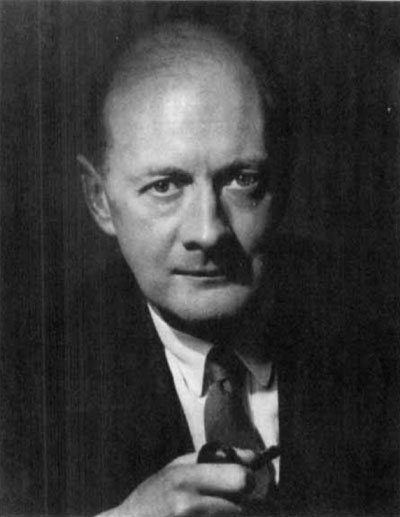
Sir Eric Riches, formerly Chairman of the Editorial Board of the British Journal of Urology and past President of BA US, died on 8 November 1987 aged 90y.
A truly distinguished surgeon and a foundingfather of British urology, his personal contributions, on so many fronts, were immense. A man of absolute integrity, enormous energy and extraordinarily purposeful endeavour, he sustained the brilliance of his career from its beginning to its end with great kindness, courtesy and modesty.
Son of a schoolmaster, he was born in Alford, Lincolnshire, on 29 July 1897, where he was educated at the local Grammar School and thence, by open scholarship, to Christ's Hospital. The value and privilege of this he was always to remember and in later years he returned as Treasurer and as Chairman of its Council of Almoners.
When war broke out in 1914 he was 17; he enlisted and served in the Infantry of the 10th Lincolnshire and 11th Suffolk Regiments, rising to the rank of Captain and Adjutant. He won the Military Cross in 1917.
The Middlesex Hospital Medical School had deferred the entrance scholarship he had won before the war and he took this up in 1919. He punctuated a brilliant student career by winning the Lyell Gold Medal in Surgery and the coveted Senior Broderip Scholarship; nevertheless he found time to play both rugger and golf for the hospital.
His clinical career was shaped by the Great. After a most formative initiation into Medicine by Robert Young and George Beaumont he became House Surgeon to Sir Gordon Gordon-Taylor-and later Surgical Registrar to Blundell Bankart and to Sir Alfred (Lord) Webb-Johnson. He obtained his Fellowship of the Royal College of Surgeons and his London Mastership of Surgery in 1927, just 2 years after he qualified. Prestigious consultant appointments followed-the Middlesex Hospital, the Royal Masonic Hospital, the Hospital of St John and St Elizabeth, and St Andrews, Dollis Hill. He was also appointed Consultant Urological Surgeon to the Army and Consulting Surgeon to the Ministry of Pensions.
Primarily a general surgeon, he devoted himself to the development of urology as a specialty-his contributions and publications created much of its early history. His advancement of the treatment of bladder and kidney tumours was based on his astute clinical judgement and the careful analysis of his meticulous follow-up punch-card record of each and every one of his patients, both hospital and private.
He was one of the finest surgical operators of his day-and one of those few that others flocked to watch. He was not only a fine technician but also an innovator. He pioneered the use of the supra pubic catheter for the treatment of acute retention; although we no longer use his "Secret Weapon" for its introduction, we still ask for Riches diathermy forceps, insulated down to the tip.
A founder member of the Council of the British Association of Urological Surgeons, its President in 1951 and also Chairman of the Editorial Board of the British Journal of Urology, he received the St Peter's Medal in 1964-the criterion for this award is that "but for his contributions, British urology would not have reached its present peak". He received his knighthood in 1958. He was also President and Lettsomian lecturer of the Medical Society of London and President and Orator of the Hunterian Society. At the Royal Society of Medicine he was a Vice President and Honorary Librarian and had presided over the clinical section as well as the sections of urology and surgery.
His urological reputation was world-wide. He was elected to the American Society of GenitoUrinary Surgeons in 1953, to the Vice Presidency of the International Society of Urology in 1961 and was President of its highly successful XIIIth Congress in London in 1964. He was elected to a number of Visiting Professorships in the United States and many National Urological Associations-among them the Australasian.
And yet he had another world-the Royal College of Surgeons. Elected to Council in 1950 and Vice Presidency in 1961, he was Hunterian Professor in 1938 and 1940, Jacksonian prizeman in 1942, Bradshaw lecturer in 1962, a member of the Court of Examiners and Curator of the Surgical Instruments.
While urology was inevitably his main interest, we remember other things; in the 1950s he played the 'cello in the Middlesex Hospital orchestra and for many years his Christmas cards were photographs taken, developed and printed by himself.
Behind all this was a warm and caring family life. In 1927 he married Annie Brand, a Middlesex Hospital Sister; they had two daughters and 25 happy years together before her death. In 1954 he married Ann Kitton and there followed another daughter and another 23 happy years. When he eventually retired he took great pride in the many and continuing contributions of his Lady Ann, and of his three daughters.
Shortly after their election to Council of the Royal College of Surgeons, each new member takes the Chair at one of its Club meetings-a fateful evening when, after dinner, they are called upon to explain just how they came to make the journey from the "cradle" to that Chair. The 294th meeting 34 years ago, on 30 July 1953, was "Eric's day". The 35 members present on that occasion are a pantheon of surgical history. Among them were Patterson Ross, Ian Aird, Lambert Rogers, Stanford Cade, Victor Negus, Clement Price-Thomas, Arthur Porritt, Charles Wells, Webb-Johnson, Geoffrey Keynes, Reginald Watson-Jones, Harry Platt, Archibald Mcindoe, Hedley Atkins, Russell Brock, Cecil Wakely, Milnes Walker, Naunton Morgan and Gordon Gordon-Taylor. Thus we remember Eric-a Giant among Giants.
Sir Eric Riches, formerly Chairman of the Editorial Board of the British Journal of Urology and past President of BA US, died on 8 November 1987 aged 90y.
Full Obituary